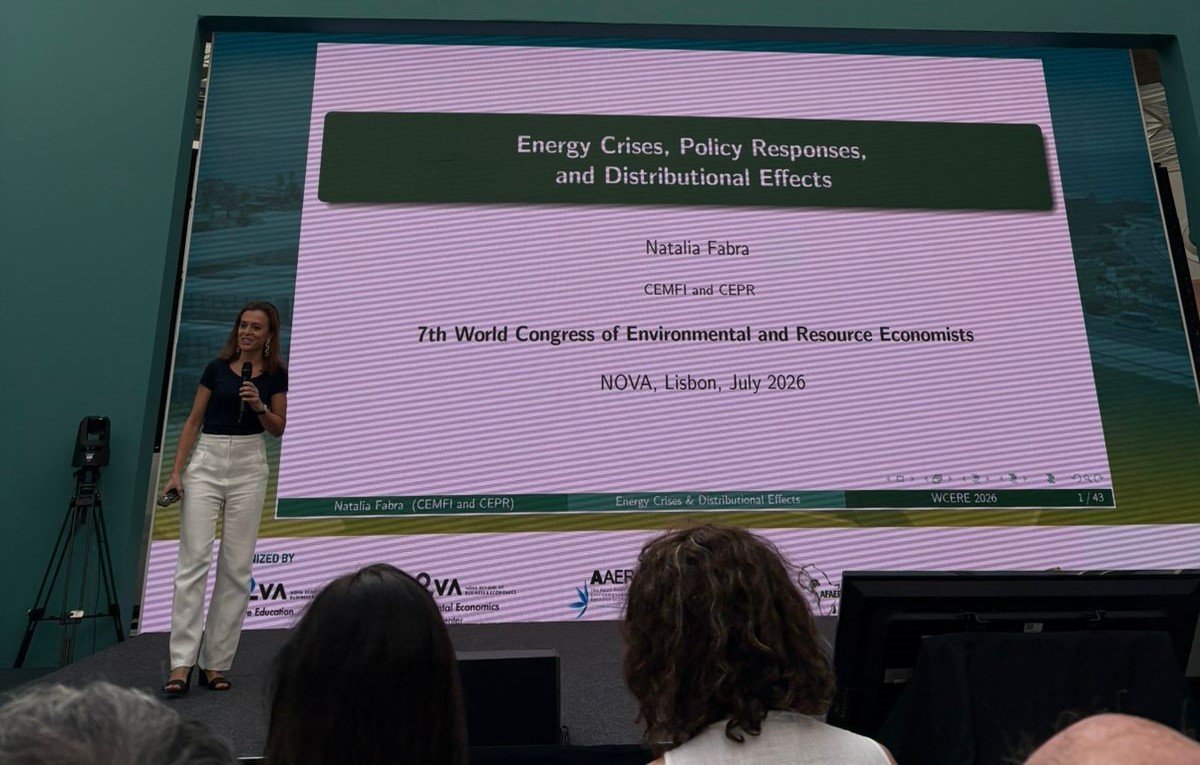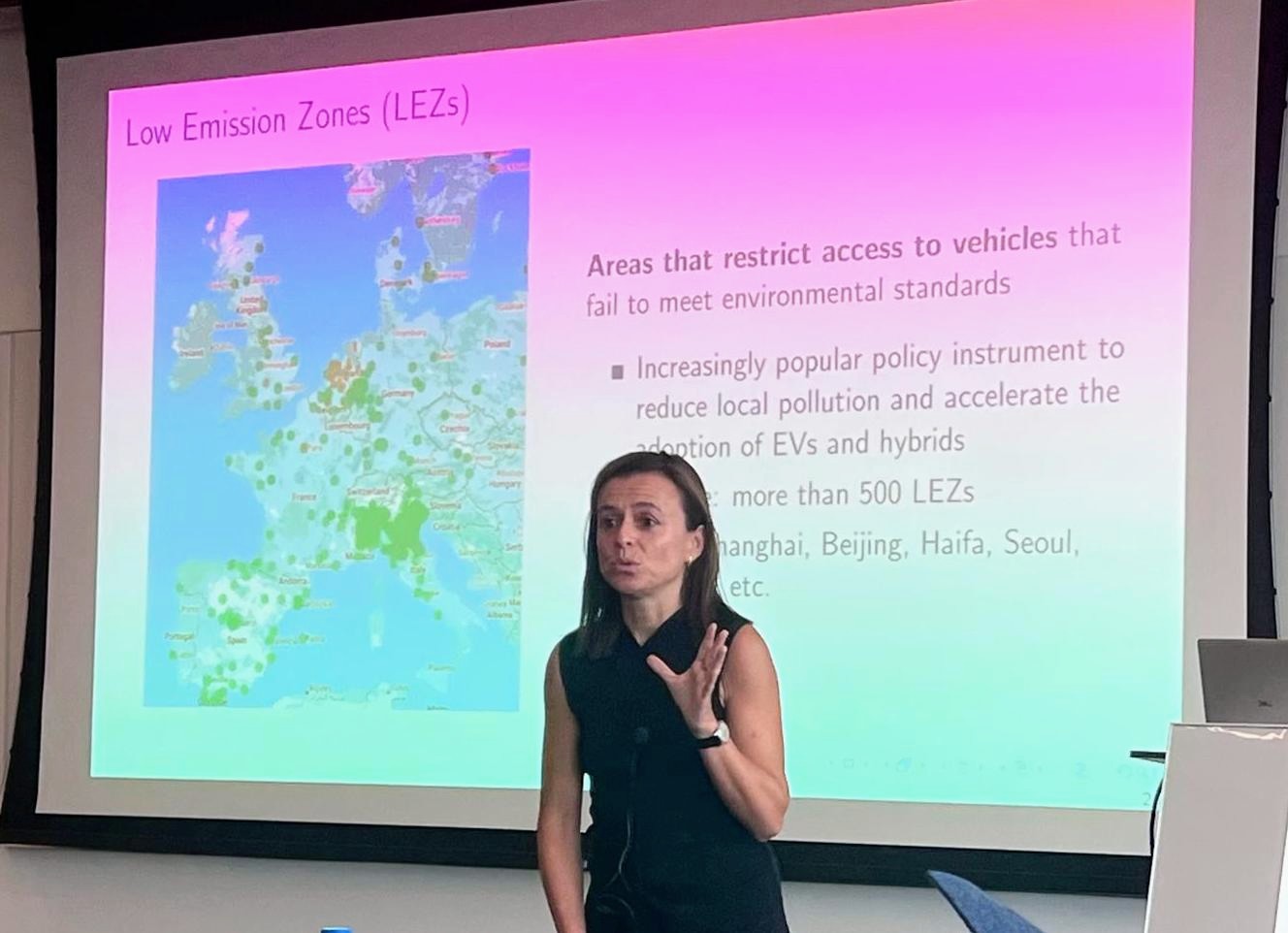
Natalia Fabra presents at the 2026 IO+ Conference at the University of Chicago
Natalia Fabra presents at the IO+ Conference at the University of Chicago the recently released EEL working paper, “Designing low emission zones: theory and evidence,” coauthored with Nano Barahona (Berkeley), Imelda (Geneva Graduate Institute), and Juan Pablo Montero (PUC-Chile).
The paper asks how a low emission zone (LEZ) should be designed: which vehicles to restrict, over how large an area, and on what timetable. Using Madrid Central as a case study, it finds that the LEZ accelerated the adoption of hybrids and, to a lesser extent, electric vehicles. It also reduced sales of new gasoline and diesel cars, with no significant effect on scrappage or transfers to other provinces.

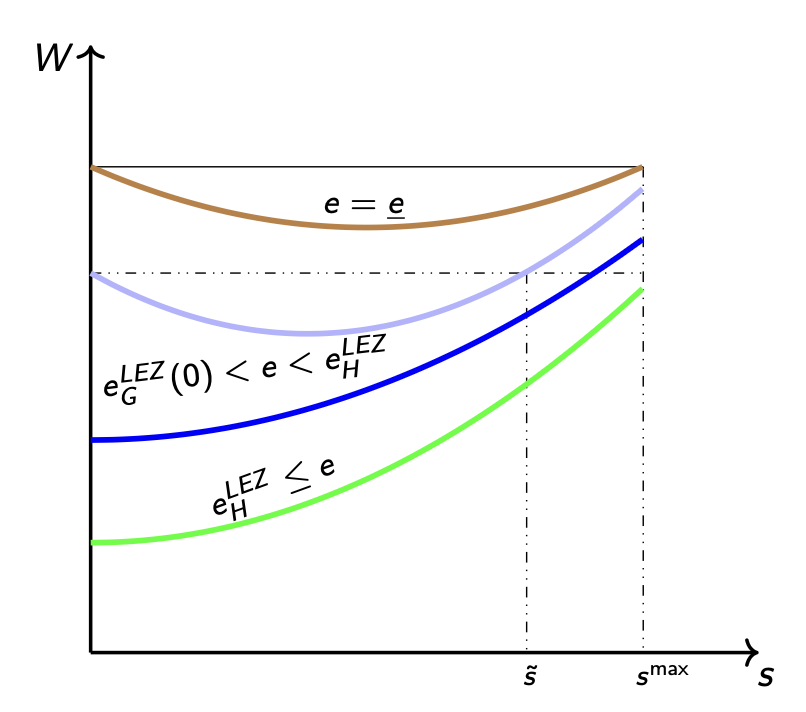
The theory shows why design matters. Unlike taxes, LEZs ration access inefficiently, because they impose costs on all the drivers who keep a restricted car and not only on those who switch. The welfare function is therefore convex in LEZ size, which gives a “bang-bang” rule: a LEZ should be as large as politically feasible or not implemented at all if the largest admissible zone is too small. Moreover, if the planner can credibly commit to a time-variant LEZ, hybrids can serve as a transition technology, exempt at first and restricted later.
To test this, the authors estimate a structural model of new-car demand in Madrid and price the externalities of each vehicle type. Under the baseline, Madrid’s LEZ does not pass the welfare test. The emissions savings do not compensate for the loss in consumer surplus due to the restriction. The key reason is that substitution patterns away from the polluting cars are too weak. Indeed, a LEZ would pay off only under stronger substitution patterns. In a counterfactual with a higher price elasticity, restricting both gasoline and hybrid cars becomes welfare-improving.
The policy message is to prioritize measures that make it easier for drivers to switch cars, such as better chaging infrastructure, so that the benefits due to greater green car adoption offset the costs of the restrictions. The authors caution that the analysis leaves out local benefits for residents, such as local amenities. If those are large, Madrid’s small LEZ may not have been such a bad idea after all.