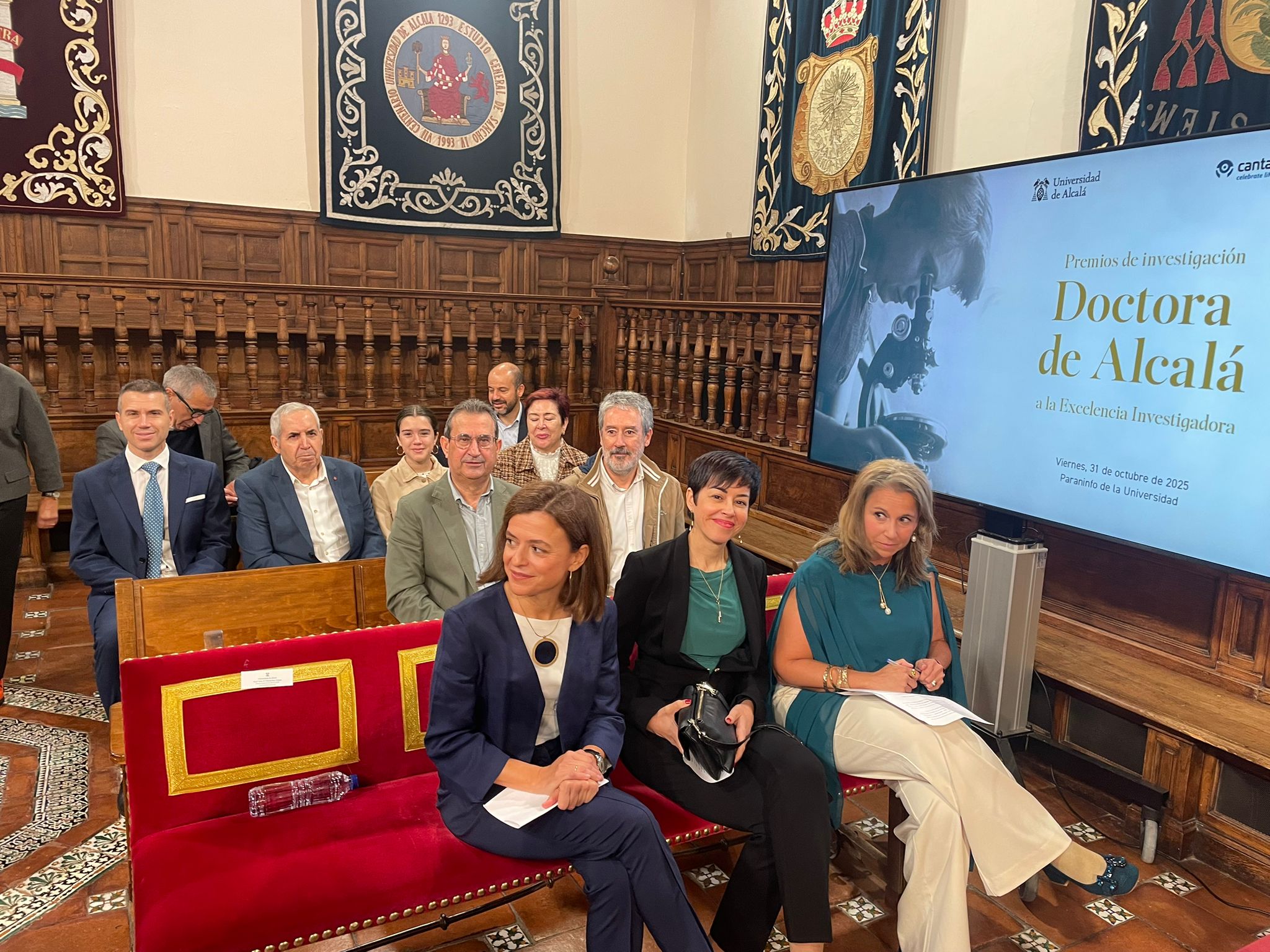
Natalia Fabra Receives the Doctora de Alcalá Award for Research Excellence
Energy costs are a key factor in industrial competitiveness: Spanish Electro-intensive industries face higher electricity prices than competitors in France or Germany, undermining competitiveness, jobs, and exports. A smarter electricity market design and long-term contracts are essential to bring electricity prices closer to actual costs.
Decarbonization as an opportunity: The energy transition can become a growth engine for Spanish industry — reducing costs, boosting competitiveness, and creating jobs in new and growing sectors such as solar PV, batteries, and hydrogen, with strong export potential.
A call for industrial policy: To fully capture these opportunities, Spain needs stable and competitive energy prices, investment in R&D and skills, and clear policies linking climate goals with industrial innovation and financing.
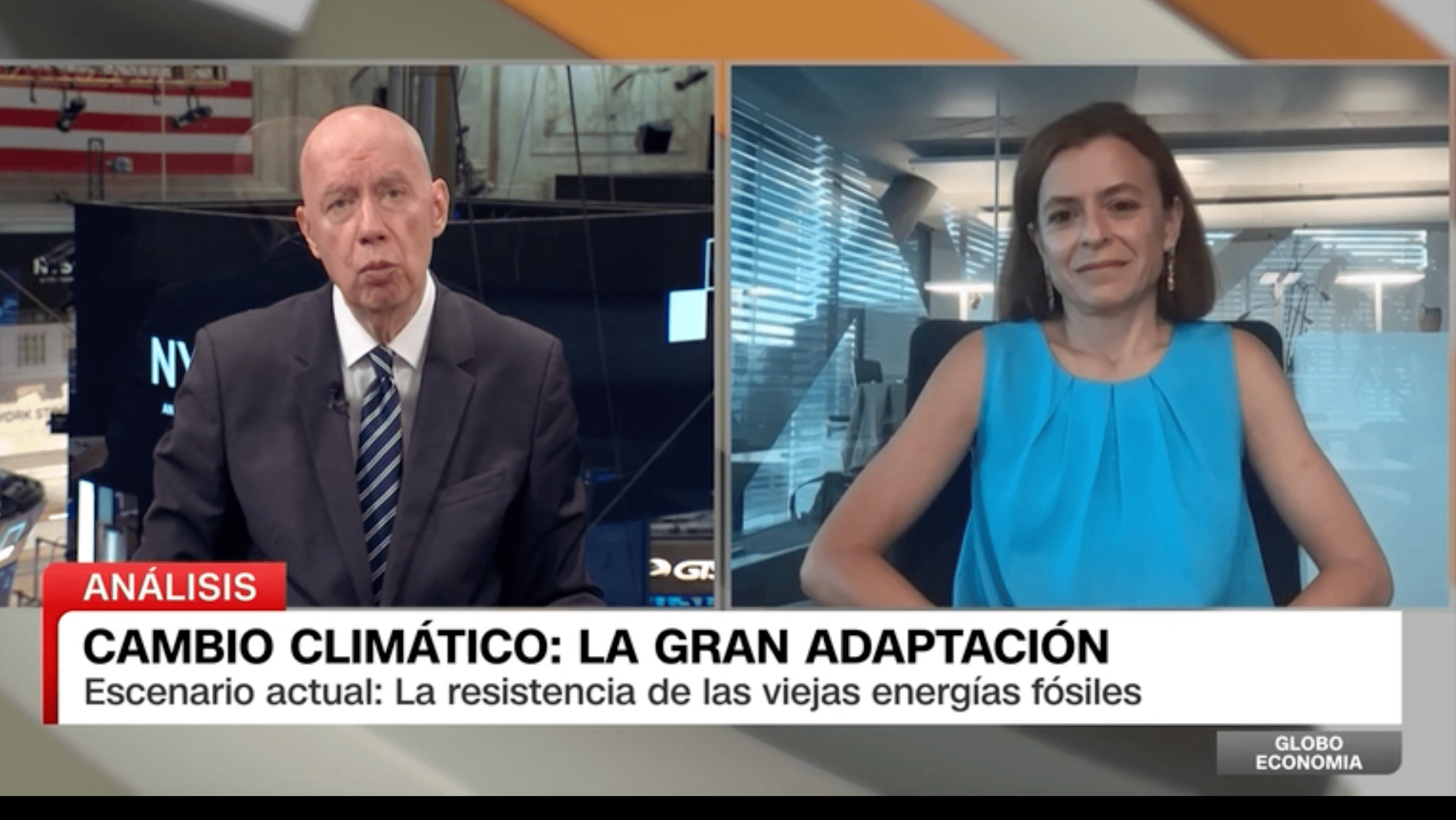
José Antonio Montenegro interviews Natalia Fabra for Globoeconomía (CNN en Español), a CNN production by Warner Bros. Discovery.
They discuss the urgent need to triple investments in renewables and energy storage to meet the rising electricity demand driven by electrification and the expansion of data centers.
Natalia also highlights the importance of developing common metrics to measure emissions and climate risks, enabling companies to better evaluate the profitability of adaptation investments, and helping banks to channel funds toward the most effective projects.
The conversation touches on the key challenges of the energy transition — renewables, storage, grid infrastructure, green hydrogen, and incentives for firms and households to adopt clean technologies.
The interview can be watched here, in Spanish.
On September 19, 2025, Natalia Fabra gave the Inaugural Conference of the Graduation and Welcome Ceremony for the 2026-2025 academic year, organized by the International Master and Doctorate in Economic Analysis (IDEA) from the Department of Economics and Economic History at the Universitat Autònoma de Barcelona.
Her lecture, entitled “Economics of the Energy Transition”, can be downloaded here.
Europe’s recent energy crisis generated large windfall rents for electricity producers. Yet, most EU governments responded with costly downstream measures that left wholesale prices – and producer profits – largely untouched. This column shows that Spain and Portugal charted a different course by intervening directly in the wholesale market, decoupling electricity prices from gas. This substantially lowered consumer bills, with little impact on public funds. Crucially, the intervention provided proportionally greater relief to low-income households, highlighting how policy design can shape both efficiency and equity in times of crisis.
Authors: Natalia Fabra, Clement Leblanc, Mateus Souza
The debate over how best to shield households and firms from high and volatile energy prices shows no sign of ending — it is now driven as much by geopolitical turmoil as by climate-related supply shocks. Should governments cap retail prices, cut taxes, hand out transfers, or intervene upstream at the wholesale level? As the experience of the 2021-2023 energy crisis in Europe makes clear, the choice of instrument ultimately determines who shoulders the costs and who reaps the benefits.
Recent work has mapped the macroeconomic fallout of the 2021-2023 energy crisis — output losses, inflation spikes, and tighter monetary conditions (e.g. Bachmann et al. 2024, Krebs and Weber 2024). What has received far less attention is the distributional consequences that lie behind these aggregates: the windfalls accruing to some energy producers, the burdens falling on households and taxpayers, and the uneven effectiveness of policy shields across income groups and regions. In recent work (Fabra et al. 2025), we have quantified the distributional impacts of the energy crisis in Spain, where the energy shock was severe and the policy response — shared with Portugal — was unlike anything seen elsewhere in the EU.
Figure 1 Gas and electricity prices in European exchanges
Panel A) Gas
Panel B) Electricity
Almost a year before the war in Ukraine, the energy crisis began with an extraordinary surge in European gas prices as Russian pipeline deliveries slowed and markets priced in growing risks of supply disruptions (Figure 1). In wholesale electricity markets — where gas-fired plants often set the marginal price — the pass-through to higher electricity prices was immediate (Fabra 2023). As illustrated in Figure 2, the outcome was costly power for consumers and a surge in inframarginal rents for generators whose costs remained largely unchanged (nuclear, hydro, and renewables). As the European Commission President put it at the time, low-carbon generators were earning revenues “they never dreamt of” and that did not reflect their costs (von der Leyen 2022).
Figure 2 Pass-through of gas prices to electricity prices and inframarginal rents
Most countries responded downstream, implementing retail caps, tax cuts, and transfers to cushion energy bills. While these measures created large fiscal outlays (Ferdinandusse and Delgado-Téllez 2024, Sgaravatti et al. 2023), ultimately borne by taxpayers, they left wholesale market pricing intact and did little to touch inframarginal windfalls. Spain and Portugal chose an upstream alternative, known as the ‘Iberian solution’: a temporary cap on the gas costs of fossil-fuel generators, financed through a surcharge on consumers exposed to wholesale prices. As illustrated in Figure 3, the aim was to delink electricity prices from gas by inducing lower bids from the price-setting units, thereby compressing inframarginal rents without writing a large fiscal cheque.
Figure 3 The Iberian solution
In Fabra et al. (2025), we study the distributional consequences of the crisis and the Spain-Portugal intervention for both electricity producers and consumers in Spain. At the wholesale level, we simulate counterfactual electricity market outcomes under five scenarios; results are shown in Figure 4. Taking differences across these scenarios allows us to separate the effects of (i) the crisis itself, (ii) the price intervention, and (iii) contemporaneous energy-saving measures. To build these scenarios, we construct counterfactual input prices (fossil fuels, carbon, the price of French imports) and estimate electricity demand absent the crisis using machine-learning techniques. At the retail level, we combine simulated hourly wholesale prices with rich data on household electricity consumption at the ZIP-code level to compute bill changes for Spanish households. We also analyse how those changes vary across consumer groups, clustered based on income, weather variables, and consumption profiles.
Figure 4 Simulated wholesale electricity prices in Spain 2020-2023
Our approach addresses two blind spots in the debate. First, the surplus reallocation between electricity producers and consumers has been discussed mostly in qualitative terms. We carefully quantify these transfers. Second, household distributional effects have been inferred from average bills or representative households. We draw on hourly consumption data from 8,390 ZIP codes to identify which households were hit hardest by the crisis and which gained the most from the wholesale intervention.
Table 1 Policy intervention and crisis effects on earnings, costs, and profits (million €, July 2021-July 2023)
Figure 6 Actual versus predicted aggregate electricity demand
The Iberian solution contrasts with retail-side caps used in the UK and the block tariffs/guaranteed-baseline schemes in Germany and the Netherlands. Retail caps protected households quickly (Levell et al. 2025), but at a fiscal cost and with complex knock-on effects on retail competition (Haan and Schinkel 2023). Baseline-style shields preserved some marginal incentives to save but again required large taxpayer support and risked entrenching higher retail mark-ups (Dertwinkel-Kalt and Wey 2025). By intervening upstream, Spain and Portugal acted where the rents arose — in the wholesale market — compressing the spread between marginal and inframarginal technologies and shifting surplus toward consumers.
This design choice also shaped cross-border dynamics and environmental trade-offs. Lower wholesale prices in Iberia increased electricity exports to France, raising concerns that Iberian consumers would effectively subsidise foreign relief and that gas-fired generation (and associated emissions) could rise. Our estimates confirm these concerns: Spain’s exports rose by 120% as a result of the price intervention. To meet this additional demand, thermal generation expanded, driving higher emissions — although accompanying savings measures partially mitigated the impact. Overall, the combined effect of both policies was an 18% increase in power-sector carbon emissions.
It is important to note, however, that this rise in Spanish emissions may have been partly offset by reductions in France, to the extent that Spanish electricity displaced French gas-fired generation. Since carbon is a global pollutant, what ultimately matters is the net cross-border effect. Moreover, these distortions would have likely been avoided under a European-wide implementation of the Iberian solution.
The experience of the 2021-2023 energy crisis shows that the surge in gas prices minted significant inframarginal rents for electricity producers. Yet, results from the Iberian solution revealed that policy instruments acting directly at the wholesale margin can claw back part of those rents without drawing on general fiscal resources. The wholesale price intervention substantially reduced household bills. Higher-income households captured larger savings in absolute euro terms, but the relief was proportionally greater to lower-income families. The crisis also underscored that conservation policies matter at least as much as price adjustments in driving down demand, highlighting the value of pairing upstream relief with ambitious savings targets. More broadly, the lesson is that distributional outcomes can be designed in advance. As climate variability and geopolitical tensions increase the likelihood of future shocks, building such distributional considerations into policy design will be essential.
Bachmann, R, D Baqaee, C Bayer, M Kuhn, A Loschel, B Moll, A Peichl, K Pittel and M Schularick (2024), “What if? The macroeconomic and distributional effects for Germany of a stop of energy imports from Russia”, Economica 91(364): 1157–1200.
Behr, S M, Till Koveker and M Kucuk (2025), “Understanding energy savings in a crisis: The role of prices and non-monetary factors”, DIW Discussion Papers 2112.
Dertwinkel-Kalt, M and C Wey (2025), “Why Energy Price Brakes Encourage Moral Hazard, Raise Energy Prices, and Reinforce Energy Savings”, RAND Journal of Economics 56(2):129–144.
Fabra, N (2023), “Reforming European electricity markets: Lessons from the energy crisis”, Energy Economics 126(C).
Fabra, N, C Leblanc and M Souza (2025), “Unpacking the Distributional Implications of the Energy Crisis: Lessons from the Iberian Electricity Market”, CEPR Discussion Paper No. 20593.
Ferdinandusse, M and M Delgado-Téllez (2024), “Fiscal policy measures in response to the energy and inflation shock and climate change”, European Central Bank.
Haan, M and M Pieter Schinkel (2023), “Energy price ceilings with partial cover: A Dutch master?”, Journal of the European Court of Auditors, April.
Krebs, T and I Weber (2024), “Can Price Controls Be Optimal? The Economics of the Energy Shock in Germany”, IZA Discussion Papers 17043.
Levell, P, M O’Connell and K Smith (2025), “The welfare effects of price shocks and household relief packages: Evidence from the European Energy Crisis”, CEPR Discussion Paper 19939.
Sgaravatti, G, S Tagliapietra, C Trasi and G Zachmann (2023), “National fiscal policy responses to the energy crisis”, Bruegel, 26 June.
von der Leyen, U (2022), “Statement by President von der Leyen on energy”, European Commission, 7 September.

Starting September 2025, four new members will join EnergyEconLab at CEMFI, contributing to the group’s research activities.
Paula Navarro will join EnergyEconLab as a Postdoctoral Fellow. Her research lies at the intersection of competition policy and environmental economics, with particular attention to demand estimation and transportation.
She received her PhD in Economics from the Norwegian School of Economics (NHH) in 2025.
Ozgen Kiribrahim-Sarikaya will join EnergyEconLab as a Postdoctoral Fellow . Her work explores how environmental policies affect economic welfare, with attention to equity–efficiency trade-offs.
Her recent projects analyze the distributional effects of air pollution regulations, the impact of solar subsidies across income groups, and the long-term health consequences of pollution exposure. She completed her PhD in Economics at Arizona State University in 2025.
Sonnur Bas is a PhD student in Economics at CEMFI. She holds degrees from Boğaziçi University (BA) and Sabancı University (MA) in Turkey.
Before starting her PhD, she worked as a teaching and research assistant on electricity markets, urban economics, and game theory, and interned at the Shura Energy Transition Center, contributing to projects on electricity transmission and green hydrogen.
Lorenzo Cattabriga will join EnergyEconLab as a Predoctoral Research Assistant. He holds a BA in Political Science from the University of Milan and an MSc in Economic and Social Sciences from Bocconi University, where he also worked as a research assistant.
He previously interned in economic consulting, contributing to projects on competition policy and damages estimation.
We are delighted to announce that EnergyEconLab has found a new home at CEMFI.
CEMFI is internationally renowned for its excellence in economics and finance research. Its rigorous academic environment offers EnergyEconLab access to leading scholars, a vibrant research culture, and a strong commitment to high-quality output. Being part of CEMFI also connects us to a broad network of researchers, institutions, and policymakers across Europe and beyond.
CEMFI’s graduate programs attract some of the brightest students in economics, providing EnergyEconLab with a steady pipeline of motivated young researchers and assistants. In turn, students gain unique opportunities to participate in frontier work on energy and environmental economics. Together, this will ensure our research remains academically rigorous, globally impactful, and firmly aligned with our mission of delivering sound insights and rigorous evidence on energy and climate policies and their impact.
We are deeply grateful to the Economics Department at Universidad Carlos III de Madrid, where EnergyEconLab was founded and thrived over the past seven years. Their support created a unique environment that allowed us to grow, and we look forward to continuing our collaboration through ongoing research projects.