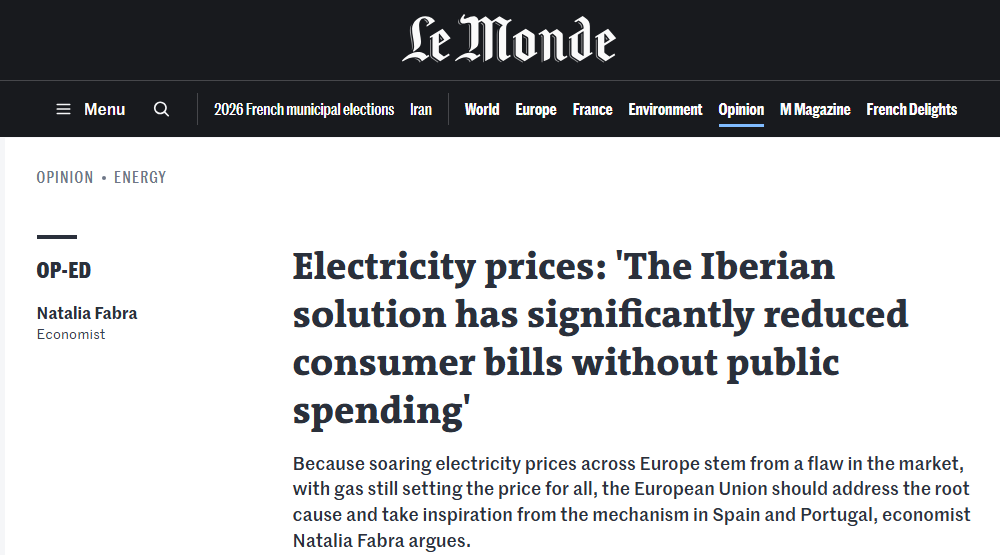
Electricity prices: ‘The Iberian solution has significantly reduced consumer bills without public spending’ – Article for Le Monde
Natalia Fabra contributed an opinion piece in Le Monde discussing the drivers of electricity prices in Europe and the lessons from the Iberian mechanism.
In the article, she argues that recent increases in electricity prices are not primarily driven by taxes or retail policies, but by the design of wholesale electricity markets, where gas-fired plants continue to set prices for all technologies. As a result, fluctuations in gas prices are quickly transmitted to electricity prices, fueling inflation and reducing competitiveness.
Rather than relying on fiscal measures such as subsidies or tax cuts—which shift costs to public budgets without addressing the root cause—the article emphasizes the need to act directly on price formation. Drawing on the experience of Spain and Portugal during the 2022 energy crisis, Fabra highlights how the Iberian mechanism reduced electricity prices by capping the cost of gas used by fossil-fuel plants, thereby lowering the bids of price-setting units.
This approach also limited the windfall profits of inframarginal technologies, such as nuclear, hydro, and renewables, which do not rely on gas but benefit from higher market prices. More broadly, the article argues that the Iberian mechanism should not be seen as a temporary or local exception, but as a potential model for coordinated action at the European level to reduce price volatility, contain inflationary pressures, and protect industrial competitiveness.
The original article (in French) can be consulted here.