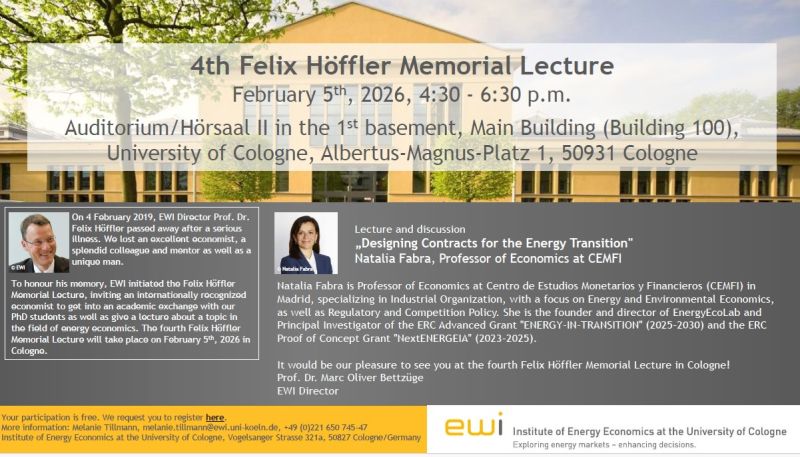
Felix Höffler Memorial Lecture in Cologne
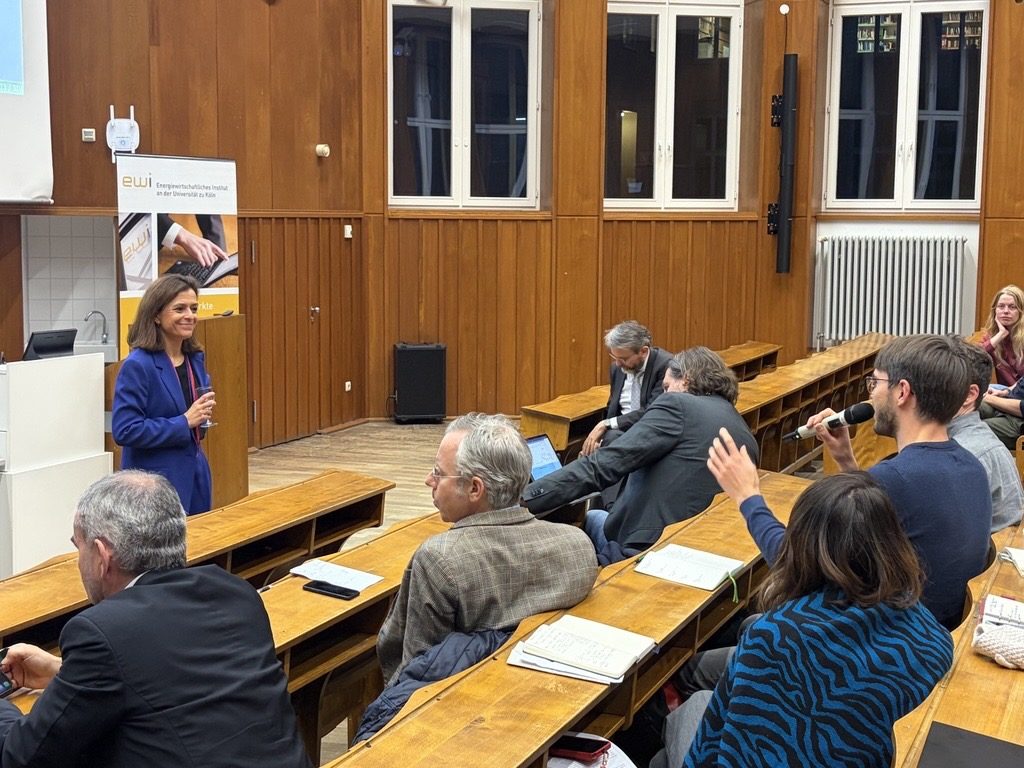
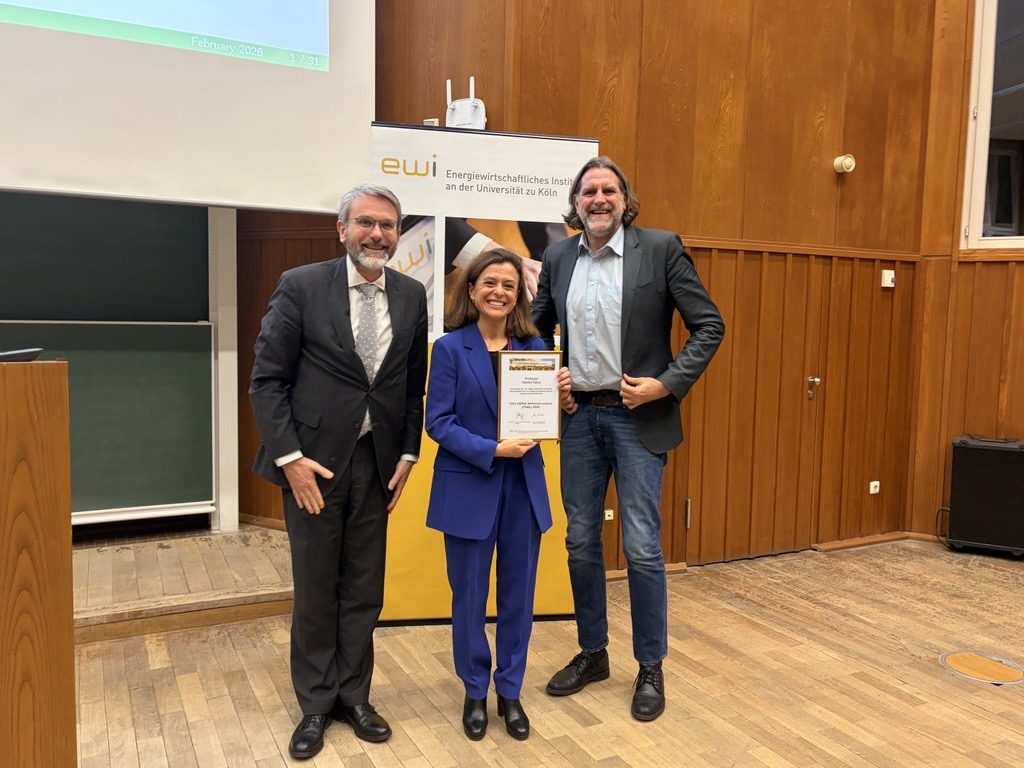
On February 5, 2026, Natalia Fabra delivered the 4th Felix Höffler Memorial Lecture at the University of Cologne, hosted by the EWI – Institute of Energy Economics.
In her lecture, Designing Contracts for the Energy Transition, Prof. Fabra discussed the role of long-term contracts in supporting investment in renewable energy. As the power sector decarbonizes, projects become increasingly capital-intensive and exposed to price volatility. In this context, financing costs and risk allocation are central to market design.
A key focus of the lecture was buyer counterparty risk in private long-term contracts. When spot prices fall below contracted prices, buyers may have incentives to renegotiate or default. This increases risk premia, raises the cost of capital for renewable producers, and can lead to underinvestment.
The lecture also examined the role of regulator-backed Contracts for Difference (CfDs) and stressed that contract design should reflect technology-specific characteristics. For dispatchable technologies, some price exposure can preserve production incentives. For intermittent renewables such as wind and solar, reducing price exposure can limit unnecessary risk while payments linked to output help select efficient projects.
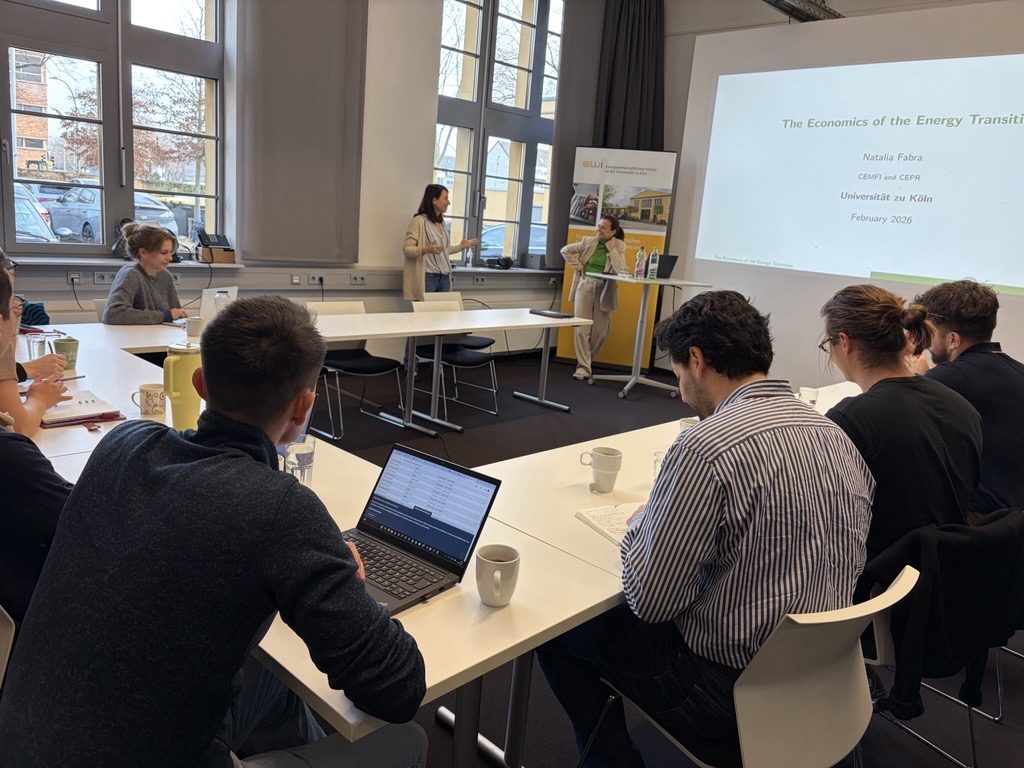
The lecture was followed by discussion with researchers and practitioners. The next day, Prof. Fabra also met with EWI PhD students for a research exchange and “Paper Clinic,” providing feedback on their ongoing projects.
We thank the EWI and the University of Cologne for the invitation and the stimulating exchange.